

How to Read a Medicine Label: A Beginner’s Guide
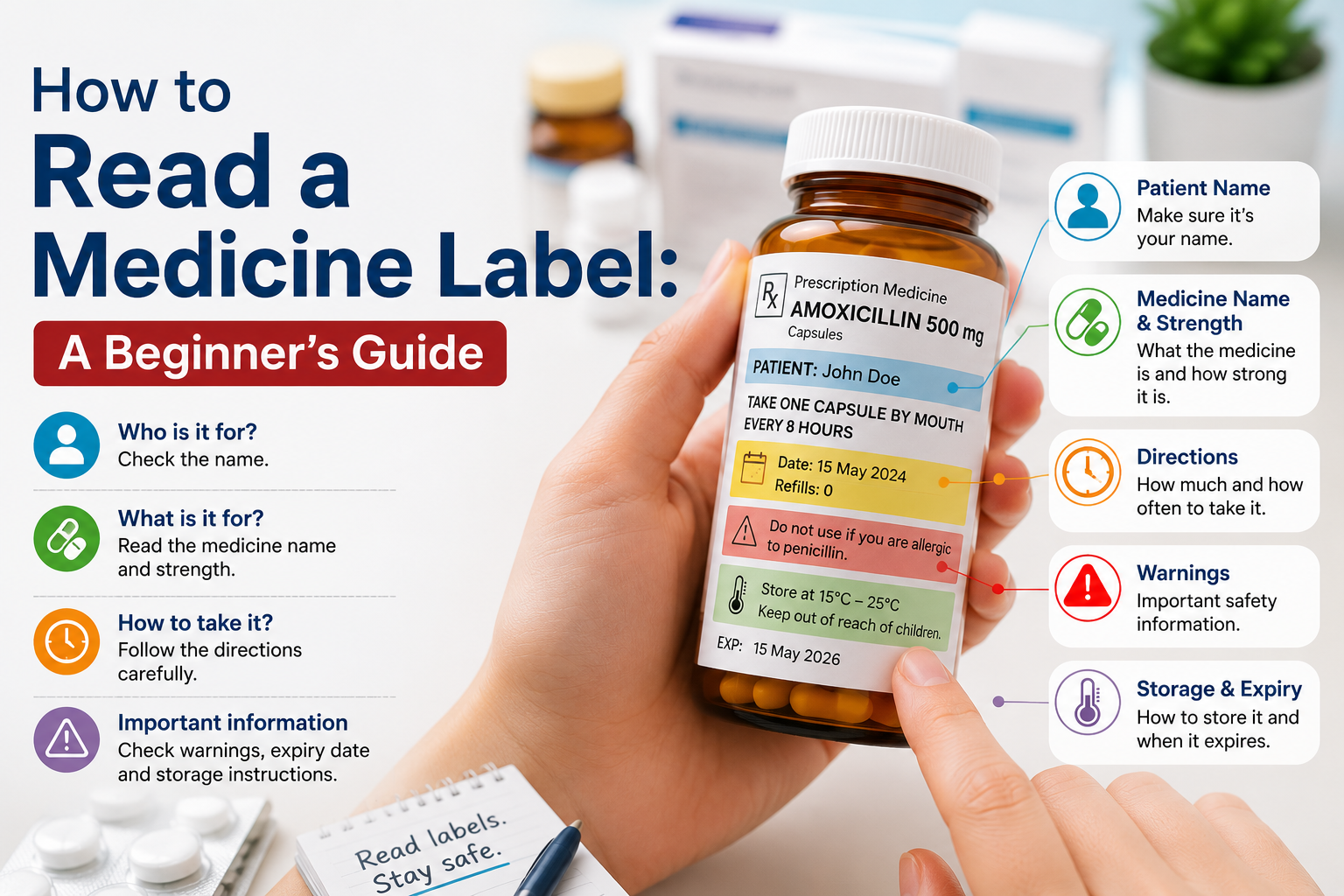
Understanding a medicine label is an important part of using medication safely. Labels contain essential information about the medicine, including its name, strength, dosage instructions, warnings, storage requirements, and expiry date.
Whether you are using a prescription medicine or an over-the-counter product, taking a few moments to read the label carefully can help you avoid common medication mistakes.
1. Check the Medicine Name
The first thing to look for is the medicine’s name. A medicine may have both a brand name and a generic name.
The generic name identifies the active ingredient, while the brand name is the name given to the product by its manufacturer.
If you are unsure whether two products contain the same active ingredient, ask your doctor or pharmacist before taking them together.
2. Check the Strength
The strength tells you how much active ingredient is present in each tablet, capsule, or measured amount of liquid.
For example, a label might show a strength such as:
- 10 mg per tablet
- 20 mg per capsule
- 5 mg per 5 mL of liquid
Do not assume that two products with the same medicine name have the same strength. Always check the number and unit carefully.
3. Read the Dosage Instructions
The dosage instructions explain how much medicine to take and how often to take it.
Depending on the medicine, instructions may specify:
- The amount to take
- How frequently to take it
- Whether it should be taken with food
- How long it should be used
- Whether the medicine should be swallowed whole
Follow the instructions provided by your healthcare professional. Do not increase or decrease the dose simply because you feel the medicine is working too slowly or quickly.
4. Look at the Expiry Date
Every medicine should have an expiry date printed on its packaging.
The expiry date indicates the period through which the manufacturer guarantees the medicine’s quality and stability when stored according to the recommended conditions.
Check the expiry date before using a medicine, especially if it has been stored for a long time.
5. Pay Attention to Warnings
Warnings are included to highlight important safety information.
Depending on the medicine, the label may contain warnings about:
- Drowsiness or reduced alertness
- Alcohol consumption
- Driving or operating machinery
- Possible interactions with other medicines
- Specific health conditions
- Pregnancy or breastfeeding
- Allergic reactions
Never ignore warning information. If you are unsure what a warning means, ask a doctor or pharmacist.
6. Check Storage Instructions
Medicine labels may include specific storage instructions.
Some medicines need to be protected from excessive heat, moisture, or direct sunlight. Others may have specific temperature requirements.
Keep medicines in their original packaging whenever possible and store them according to the manufacturer’s instructions.
7. Look for the Active Ingredients
The active ingredient is the component responsible for producing the medicine’s intended effect.
Checking active ingredients is particularly important if you take multiple medicines. Two different products may contain the same active ingredient, which could result in accidentally taking more than intended.
If you are uncertain, ask a pharmacist to review your medicines.
8. Understand Special Instructions
Some medicines have additional instructions that are important to follow.
For example, certain tablets or capsules may need to be swallowed whole rather than crushed or chewed. Some medicines may need to be taken at a particular time of day or separated from other medicines.
Always follow the instructions provided with your specific medication.
9. Check the Quantity
The packaging usually indicates how much medication is included, such as the number of tablets, capsules, or the volume of liquid.
Checking the quantity can also help you monitor how much medication you have remaining and avoid running out unexpectedly when you are following an ongoing treatment plan.
10. When Should You Ask a Pharmacist or Doctor?
If anything on the label is unclear, don’t guess.
Speak with a qualified healthcare professional if you have questions about:
- The correct dosage
- How often to take the medicine
- Possible side effects
- Interactions with other medicines
- Food or alcohol interactions
- Storage requirements
- How long to use the medicine
- What to do after missing a dose
A pharmacist can often help explain medication labels and provide guidance on proper medicine use.
Common Mistakes to Avoid
Some simple mistakes can lead to medication problems. Try to avoid:
- Taking the wrong medicine
- Confusing different strengths
- Taking an incorrect dose
- Ignoring warning labels
- Using expired medication
- Sharing prescription medicines
- Combining medicines without checking for interactions
- Storing medication incorrectly
- Assuming two products are different when they contain the same active ingredient
Final Thoughts
Reading a medicine label carefully is a simple habit that can contribute to safer medication use. Pay attention to the medicine name, active ingredient, strength, dosage instructions, warnings, expiry date, and storage requirements.
If you are ever unsure about the information on a medicine label, consult your doctor or pharmacist rather than making assumptions.
Medical Disclaimer: This article is intended for general educational purposes only and does not replace professional medical advice, diagnosis, or treatment. Always follow the instructions provided with your medication and consult a qualified healthcare professional if you have questions about its use.